Master's in Crisis Management Studies (MCM)
Master's in Crisis Management Studies (MCM)
The Master of Arts in Crisis Management Studies (MCM) is an interdisciplinary postgraduate program designed to develop professionals with the knowledge, skills, and leadership capacity to understand and address complex crises, disasters, and risks in an increasingly uncertain and changing world. The program takes a comprehensive approach to crisis management and disaster risk management (DRM), recognizing that disaster risks emerge from the interaction of hazards with social, economic, environmental, institutional, technological, and governance-related vulnerabilities and capacities.
The program emphasizes the systematic understanding, assessment, and management of disaster risk, alongside effective approaches to crisis preparedness, emergency response, recovery, resilience, and risk-informed development. It enables students to examine both existing and emerging risks, including those associated with natural hazards, climate change, environmental degradation, public health emergencies, technological and organizational disruptions, and complex humanitarian crises. Particular attention is given to reducing vulnerability, strengthening resilience, and promoting inclusive and sustainable approaches to risk reduction.
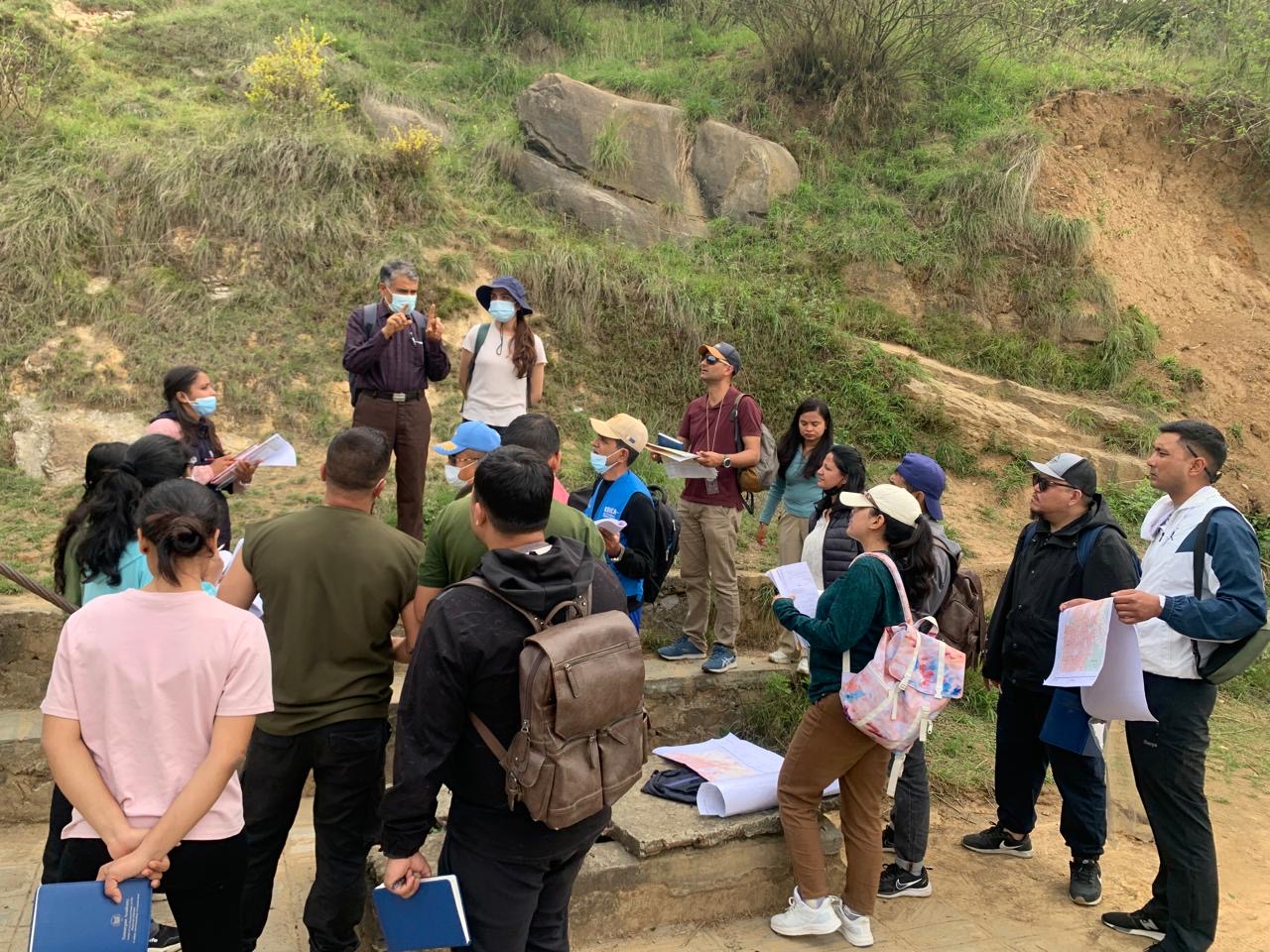
The MCM combines theoretical foundations, applied learning, research, and professional development. Students are encouraged to integrate perspectives from the natural and social sciences, governance, law, public health, technology, economics, humanitarian action, and other relevant disciplines to understand the multidimensional nature of risk and crisis. Practical and experiential learning enables students to translate knowledge into action through applied assignments, simulations, field-based learning, internships, research, and project-based activities.
The program places strong emphasis on developing the professional competencies required for effective disaster risk management and crisis leadership. Students develop critical thinking, risk assessment, problem-solving, decision-making, communication, negotiation, coordination, leadership, innovation, and stakeholder engagement skills. The program promotes ethical, inclusive, community-centered, and evidence-informed approaches, recognizing the importance of working with communities and diverse stakeholders in reducing risk and strengthening resilience.
Research and evidence-based practice are integral to the program. Students develop the ability to conduct and communicate research, analyze qualitative and quantitative information, evaluate policies and interventions, use appropriate technologies and analytical tools, and generate evidence to support effective disaster risk management and crisis decision-making. The program also encourages engagement with government agencies, humanitarian and development organizations, civil society, communities, private-sector organizations, and other stakeholders involved in risk reduction and crisis management.
Graduates of the MCM are prepared for professional and leadership roles in disaster risk management, crisis management, humanitarian action, emergency preparedness and response, recovery and resilience, policy and governance, research, and risk-informed development. They can contribute across government, humanitarian and development organizations, non-governmental organizations, international agencies, private-sector organizations, research institutions, and other sectors working to reduce disaster risk and strengthen the resilience of individuals, communities, organizations, and societies at local, national, and international levels.
-
Course Outline of All SemestersMaster in Crisis Management Studies (MCM)
First Semester
Code Subject Name Cr. Hr. Teac. Hr. T/P MCM 501 Fundamentals of Crisis & Disaster Management 3 48 T MCM 502 Law, Institutions, Governance, & Geopolitics 3 48 T MCM 503 GIS & ICT in Crisis Management 3 48 P MCM 504 Geological & Hydrological Hazards 3 48 T MCM 505 Research Methodology & Academic Writing 3 48 T Second Semester
Code Subject Name Cr. Hr. Teac. Hr. T/P MCM 551 Public Health Emergency and Response 3 48 T MCM 552 Quantitative and Qualitative Data Analysis 3 48 P MCM 553 First-Aid, Psychosocial Care, & Community Preparedness 3 48 P MCM 554 Environment, Climate Change, & Sustainable Development 3 48 T MCM 555 Economics of Disaster 3 48 T Third Semester
Code Subject Name Cr. Hr. Teac. Hr. T/P MCM 601 Crisis Communication and Conflict Management 3 48 P MCM 602 Leadership, Innovation, & Critical Thinking 3 48 P MCM 603 Humanitarian Assistance 3 48 T MCM 604 Emotional Intelligence & Negotiation Skills 3 48 P MCM 605 Human Dimensions in Disaster 3 48 T Fourth Semester
Code Subject Name Cr. Hr. Teac. Hr. T/P MCM 651 Organizational Crisis Management 3 48 T MCM 652 Internship-Capstone Project 3 48 P MCM 653 Research Seminar & Disaster Policy Lab 3 48 P MCM 654 Grant Proposal Writing and Project Management 3 48 P MCM 655 Thesis 6 - - Total Semester Credits: 63📥 Download Full Curriculum
Total Teaching Hours: 1008 Hours
T: Theory Courses | P: Practical Courses -
Eligibility for Admission
Applicants from any academic discipline who have completed a Bachelor’s degree or an equivalent qualification from Tribhuvan University or any university recognized by Tribhuvan University are eligible to apply for admission to the program.
Student Selection Process
Students will be selected on the basis of merit and performance in the entrance examination, in accordance with the rules and procedures prescribed by the Office of the Dean, Faculty of Humanities and Social Sciences, Tribhuvan University. The entrance examination will assess applicants’ foundational knowledge, analytical abilities, and aptitude relevant to the program. The entrance examination curriculum will be developed and periodically reviewed and updated by the concerned authority.
-
Scholarships and Financial Support
Scholarship opportunities are available based on the following criteria:
- Merit-Based Scholarships: For students with outstanding academic achievement.
- Need-Based Scholarships: For students demonstrating financial need.
- Scholarships for Marginalized and Underrepresented Groups: For students from disadvantaged and underrepresented communities.
These scholarship opportunities may be provided directly by the institution or supported through government agencies, NGOs, INGOs, and other partner organizations. Eligibility and selection criteria may vary depending on the scholarship scheme.
For information on available scholarships, eligibility, and application procedures, contact the Administration Office at 9765972081 or info@tuicms.edu.np.
International Students
International students are welcome to apply. Subsidized tuition fees may be available for eligible international students, subject to applicable policies. For admission and fee information, please contact info@tuicms.edu.np.